

Table of Contents
- Best Home Appliances for 2026 Upgrades: A Quick Comparison
- Best Kitchen Appliances 2026: Countertop Cooking and Convenience
- Smart Home Appliances That Earn Their Counter Space
- Energy-Efficient Home Appliances: Lower Running Costs
- When to Buy Large Appliances: Timing Your Upgrade
- Whole-Home Upgrades Beyond the Kitchen
- How to Choose the Right Appliance for Your Home
- Frequently Asked Questions
Last Updated: October 13, 2026
Best Home Appliances for 2026 Upgrades: A Quick Comparison
If you are planning the best home appliances for 2026 upgrades, start with the models that do the most work for the least money. At Home Essentials Outlet, we watch which factory-serviced appliances actually hold up, and the winners are rarely the flashiest ones on the shelf.
Here is the short version before we get into detail.
| Appliance | Our Price | Best For | Standout Feature |
|---|---|---|---|
| BYORIENT 25L Air Fryer Toaster Oven | $99.99 | Small kitchens, families | Air fry, toast, bake, roast in one unit |
| NINJA Foodi 10-in-1 Air Fry Oven | $139.99 | Replacing a full-size oven | Folds up to save counter space |
| BYORIENT 1500W Induction Cooker | $59.99 | Renters, dorms, backup cooking | Heats cookware directly, not the surface |
| De'Longhi La Specialista Arte | $399.99 | Coffee enthusiasts | Built-in burr grinder and steam wand |
| Panasonic Genius Microwave | $119.98 | Everyday reheating | Inverter power for even cooking |
| BRITA Hub Countertop Filter | $79.99 | Apartments, no plumbing | Reduces 70+ contaminants, 9-cup reservoir |
| SHARK UA205 Air Purifier | $134.99 | Large rooms, smoke season | Cleans up to 1,350 sq ft |
| ROBOROCK QX Revo Robot Vac | $249.99 | Hard floors plus carpet | Self-emptying, self-washing dock |
| SHARK Matrix Plus Robot Vac | $239.99 | Pet hair on carpet | Self-emptying base holds 30 days of dirt |
| BISSELL ProHeat 2X Carpet Cleaner | $179.99 | Pet messes, deep cleaning | CleanShot pretreater and 12-row brushes |
The pattern is simple: the appliances worth buying in 2026 are the ones that replace two or three older gadgets rather than adding a fourth.

Best Kitchen Appliances 2026: Countertop Cooking and Convenience
The best kitchen appliances 2026 has to offer are multifunctional. A single countertop unit that air fries, bakes, and roasts earns its space; three single-purpose gadgets do not.
Energy guidance from Natural Resources Canada's energy efficiency regulations is worth checking before you buy anything large, because running costs usually outlast the purchase price. Countertop appliances sidestep most of that problem by heating a small cavity instead of a full oven.
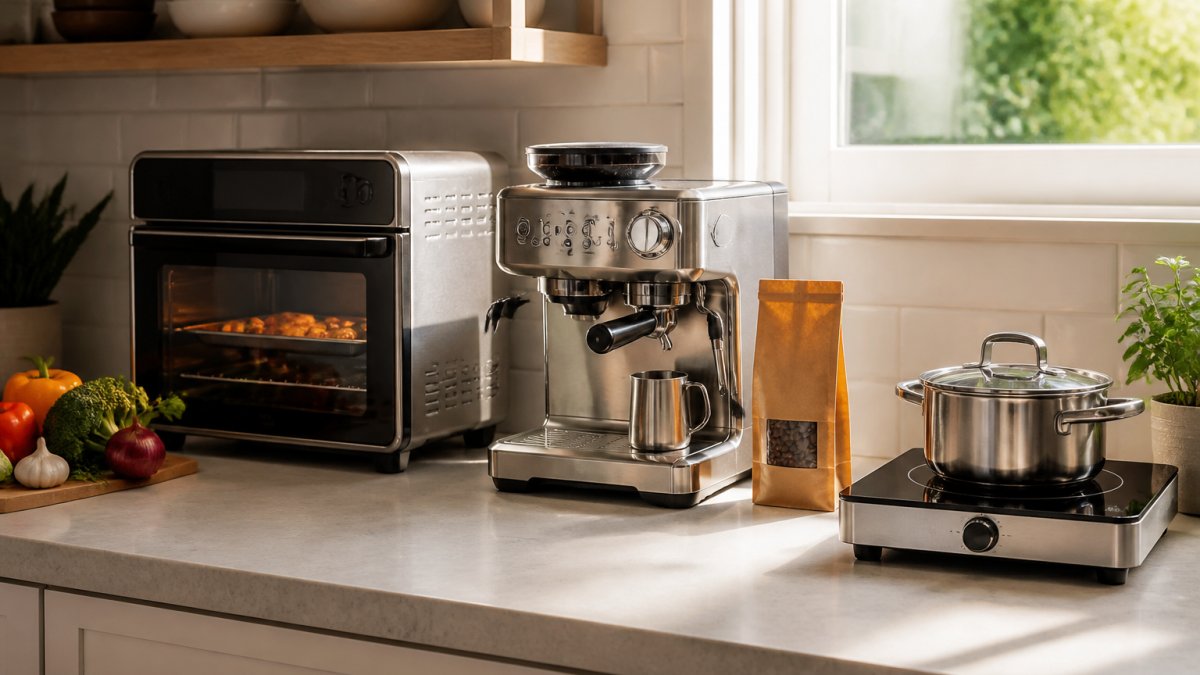
Air Fryers and Toaster Ovens
Two models cover almost every household.
The BYORIENT TL2501K 25L Air Fryer Toaster Oven ($99.99) handles fries, chicken, vegetables, toast, pizza, and baked goods in one 25-litre cavity. Multiple rack positions and an easy-view door make it genuinely usable for family portions rather than single servings. Removable accessories go straight to the sink.
The NINJA FT205CO Foodi 10-in-1 Oven ($139.99) goes further with ten functions including Air Fry, Broil, Air Roast, Bake, Pizza, Toast, Bagel, Reheat, Dehydrate, and Keep Warm. It fits a full 2-lb roast and flips up against the backsplash when you are done.
What most guides miss is the storage question. A countertop oven you cannot put away becomes permanent clutter, so measure your backsplash clearance first.
Espresso Machines and Induction Cookers
For coffee, the De'Longhi La Specialista Arte EC9155MB ($399.99) is the pick for anyone who wants hands-on control. It has a built-in conical burr grinder with 8 grind settings, three infusion temperature levels, a 15-bar pump, and a manual steam wand for microfoam. Three preset recipes cover espresso, americano, and hot water when you do not want to think about it.
If your kitchen has limited burners, the BYORIENT IX3050 1500W Induction Cooker ($59.99) adds a cooking surface without a renovation. It works in apartments, dorms, and offices, and cleans up with a wipe because the heat goes into compatible cookware rather than the glass.
Smart Home Appliances That Earn Their Counter Space
Smart home appliances are worth buying when they remove a chore, not when they add an app you open twice. The test is simple: does the automation save you a weekly task?
The ROBOROCK QX Revo QX0PEA ($249.99) passes that test. It vacuums and mops, then returns to a multifunctional dock that empties dust, washes the mop pads, and dries them.
For carpet-heavy homes, the SHARK UR2360 Matrix Plus ($239.99) is the better fit.

A common mistake is buying a robot vacuum before checking floor transitions. Thick thresholds and deep pile carpet stop cheap units cold.
Energy-Efficient Home Appliances: Lower Running Costs
Energy-efficient home appliances cut two bills at once: electricity and water. The savings come from capacity matching and duty cycle, not from a label alone.
The math is simple enough to do before you buy. Find the wattage on the rating plate or in the manual, estimate how many hours a day you actually use the appliance, and multiply:
watts ÷ 1,000 × hours used per day × your electricity rate = daily cost
Electricity prices vary by province and by time-of-use period, so use the rate printed on your own bill rather than a national average.
An induction cooker is the clearest example of efficiency by mechanism rather than by marketing. It creates a magnetic field that heats the pan directly, so very little energy escapes into the kitchen air.
ROBOROCK QX0PEA QX Revo Vacuum and Mop Robot with Multifunctional Dock →
Water efficiency works the same way.
Air treatment is the category where running costs are most often ignored. The SHARK UA205 NanoSeal HEPA Air Purifier MAX ($134.99) covers up to 1,350 square feet at one air change per hour, and Clean Sense IQ measures PM1, PM2.5, and PM10 and adjusts fan speed automatically across four settings.

A practical way to compare two models is total cost of ownership over the first three years: purchase price plus filters, detergent, or pods, plus estimated electricity at your own rate. The cheaper sticker often loses that comparison once consumables are included.
When to Buy Large Appliances: Timing Your Upgrade
The best time to buy a large appliance is when repair cost approaches replacement cost, not when a sale email arrives.
Before you decide, run the four checks that prevent the most expensive mistakes:
- Measure the opening, not the old appliance. Width, depth, height, and door swing. Refrigerators need clearance at the back and sides for airflow, and a door that cannot open past 90 degrees will not let you pull out crisper drawers.
- Confirm the electrical requirement. Most kitchen circuits are 120 V, but ranges, dryers, and some induction cooktops need 240 V. A new appliance that needs a dedicated circuit adds an electrician's bill to the purchase price.
- Check ventilation and plumbing. Over-the-range microwaves and range hoods need ducting or a recirculating filter, and dishwashers, washing machines, and fridges with water dispensers need a supply line and a drain.
- Verify the warranty and repair network. A long warranty is only useful if service is available where you live. Check whether the brand has authorized technicians in your region before you buy.
Timing also depends on supply. Appliance inventory moves in cycles, and factory-serviced stock changes constantly, which is why waiting for a specific model to reappear rarely works.
The Panasonic Genius NN-SC678S Microwave ($119.98) is a good example of a sensible replacement.
A common pattern is that the appliance you use daily fails first, and the one you use twice a year lasts forever. Prioritize replacement by frequency of use, not by age.
Buy when the old unit fails twice in a year, or when a single repair quote exceeds half the replacement price. Before that, you are usually paying for impatience.
Whole-Home Upgrades Beyond the Kitchen
Whole-home upgrades often deliver more daily value than another countertop gadget. Floor care and air quality affect every room, every day.
The BISSELL ProHeat 2X Revolution Pet CleanShot 3588N ($179.99) covers the jobs a vacuum cannot. CleanShot pretreater targets spots directly, 12 rows of Dual DirtLifter PowerBrushes work deep into carpet fibers, and HeatWave Technology keeps water hot through the clean. Express Clean Mode dries carpets in roughly 30 minutes under recommended conditions, and the 8-foot hose handles stairs and upholstery.
Pair that with a robot vacuum for daily maintenance and you have a system: robots handle the routine, the carpet cleaner handles the seasonal deep clean.
How to Choose the Right Appliance for Your Home
Choosing the right appliance comes down to four checks, in this order.
- Measure the space. Width, depth, height, and door swing. Include clearance for ventilation and for the lid or door to open fully.
- Match capacity to household size. A 25-litre oven suits a family; a 9-cup filter suits one or two people who refill often.
- Confirm the power and plumbing requirements. Induction needs compatible cookware, countertop filters need none, and large units need a dedicated circuit.
- Check the warranty and return terms before you buy. A short warranty on a heavily used appliance changes the math.
Our own approach at Home Essentials Outlet is straightforward: every factory-serviced item carries a 90-day Home Essentials warranty, and each unit passes inspection and testing against manufacturer specifications before it ships. That is the difference between a bargain and a gamble.
Frequently Asked Questions
What are the best kitchen appliances for 2026?
The best kitchen appliances for 2026 focus on versatility and space savings. A 25L air fryer toaster oven like the BYORIENT TL2501K ($99.99) handles air frying, baking, and toasting in one unit. The Ninja Foodi 10-in-1 oven ($139.99) folds up to save counter space. For coffee, the De'Longhi La Specialista Arte ($399.99) includes a built-in burr grinder. These options cover most cooking needs without crowding your kitchen.
What is the best time of year to buy large appliances?
Major appliance sales cluster around holiday weekends and end-of-season clearance events, when retailers clear floor models and older inventory. New model launches often push previous-year units to lower prices. If you are not tied to the newest release, shopping during these windows can stretch your budget further. Factory-serviced inventory at outlet stores also refreshes continuously, so it pays to check back regularly rather than waiting for one specific date.
Are energy-efficient home appliances worth the extra cost?
Energy-efficient models often cost more upfront, but the savings show up on monthly utility bills. An induction cooker, for example, transfers heat directly to compatible cookware rather than heating the air around it. Over several years, that efficiency can offset the price difference. Check the EnerGuide label on large appliances to compare estimated annual energy use before you buy, and factor in how long you plan to keep the unit.
Which home appliances are worth upgrading first?
Start with the appliances you use daily and that cost the most to run. A refrigerator or laundry pair that runs constantly will deliver bigger efficiency gains than a rarely used gadget. In the kitchen, replacing a failing microwave with an inverter model like the Panasonic Genius ($119.98) improves cooking consistency. If floor care eats your weekends, a robot vacuum with a self-emptying base can reclaim hours each week.
How do I choose the right size appliance for my home?
Measure your available space before you shop, including doorways and stairwells the appliance must pass through. For countertop units, check both the footprint and the height clearance under upper cabinets. A 25L air fryer oven needs more vertical room than a compact induction cooker. For large appliances, confirm the width, depth, and height against your cabinet opening, and leave a few centimetres of clearance for ventilation and leveling.


