

Last Updated: November 7, 2026
Quick Summary
The best hair styling tools depend on your hair's texture, density, porosity and condition, not just brand names. Fine hair needs lightweight tools on lower heat, thick hair needs strong airflow, and curly hair responds best to diffusion and low, even heat.
- Assess texture, density, strand thickness, porosity and damage history before comparing any tool.
- Fine hair suits lower heat and airflow-based styling, such as the Dyson Airwrap Complete Long Barrel at $429.99.
- Thick hair needs higher airflow and power, such as the Shark HD125C HyperAir IQ at $139.99.
- Curly hair responds best to diffusion and low, even heat, so the Dyson Supersonic's diffuser suits it.
- Start fine, damaged or high-porosity hair at the bottom of the 121°C to 149°C range.
Table of Contents
- Start With Your Hair Type and Styling Goal
- Best Hair Tools for Fine Hair
- Best Hair Tools for Thick Hair
- Hair Styling Tools for Curly Hair
- Ceramic vs Titanium Hair Tools: Which Plate Material Fits You
- Setting Safe Temperatures and Protecting Your Hair
- Pick Your Next Styling Tool From the Outlet
- Frequently Asked Questions
Choosing the best hair styling tools for your hair type starts with one question: what does your hair actually need? A tool that gives sleek, bouncy results on fine hair can leave thick hair looking flat, and the wrong heat setting can damage curls you have worked hard to maintain. At Home Essentials Outlet, we carry a range of styling tools from brands like Dyson, Shark and Relaxus, and this guide walks you through how to match a tool to your hair, your styling goals and your budget. Prices below are in CAD.
Start With Your Hair Type and Styling Goal
Before you compare any product, take a minute to assess your hair. The tool that suits you depends far more on four characteristics: texture, density, porosity and condition, than on brand names or feature lists alone.
Reading Texture, Density and Strand Thickness
Texture describes the shape of each strand: straight, wavy, curly or coily. Density describes how many strands grow on your scalp. Strand thickness is separate from both; fine strands are thin in diameter, coarse strands are thick, and you can have high-density fine hair or low-density coarse hair.
Here is how those combine in practice:
- Fine, low-density hair: falls flat quickly and overheats fast. Favor lower heat, airflow-based styling and lightweight barrels.
- Fine, high-density hair: looks full but still damages easily. A dryer with a concentrator plus a small round brush gives lift without prolonged heat.
- Coarse, high-density hair: takes longer to dry and needs sustained heat to hold a shape. Prioritize airflow power and a tool that holds temperature under load.
- Coarse, low-density hair: can look sparse at the root but resists styling. Use medium heat with tension rather than maximum heat.
Why Porosity Matters More Than Texture Alone
Porosity describes how readily hair absorbs and releases moisture. Low-porosity hair has a tight cuticle and resists moisture; high-porosity hair has a raised cuticle and loses moisture quickly. This changes how a tool behaves:
- Low-porosity hair often needs a little more heat or a pre-styling product to accept a shape, and it can stay damp at the core even when the surface feels dry.
- High-porosity hair absorbs heat and moisture fast but also loses them fast, so it frizzes easily and benefits from lower, more even heat and a diffuser.
A quick at-home check: drop a clean strand in a glass of water. If it floats for several minutes, porosity is likely low; if it sinks quickly, porosity is likely high. This is a rough indicator, not a lab test, but it is more useful than guessing.
Factor In Damage History
Heat-damaged, color-treated or chemically relaxed hair behaves like a different hair type. If your strands feel rough, stretch when wet, or break easily, treat them as high-porosity and fragile: lower heat settings, gentler attachments and less frequent styling usually work better. A tool with precise, low starting temperatures is more valuable here than a high-wattage one.
Match the Tool to Your Styling Goal
Ask yourself what result you want most, then map it to a tool category:
- Smooth, straight styles: a straightener or a smoothing brush.
- Volume and body: a dryer with a round brush or a concentrator.
- Defined curls or waves: a diffuser or a curling tool with a barrel matched to the curl size you want.
- Wet-to-dry styling with less direct heat: an airflow-based styler.
Most people need two or three tools to cover their routine, so start with the result you want on an average day, not the one you want for a special occasion. If you are unsure, a single versatile dryer with a concentrator and diffuser covers more ground than a single-purpose hot tool.
Best Hair Tools for Fine Hair
Fine hair needs gentle heat and lightweight tools that add lift without weighing strands down. The Dyson Airwrap Complete Long Barrel in Nickel and Copper (refurbished, Excellent, with a 1 year warranty) is a premium option at $429.99. Its Coanda-effect airflow styles hair with less direct heat. Note that the Airwrap is designed to work best with medium to long hair, so shorter fine cuts may not benefit as much.

For a lower-cost dryer, the Relaxus Rose Midnight Full-Size Hair Dryer at $32.99 offers two speeds, three heat settings and a cool shot button to set your style. It is a practical choice if you want basic control without a premium price.
Best Hair Tools for Thick Hair
Thick hair usually needs more airflow and higher power to dry efficiently and hold a shape. The Shark HD125C HyperAir IQ Hair Dryer ($139.99, factory serviced with a Home Essentials warranty) combines high-velocity air with ionized airflow and includes several styling attachments. Its intelligent sensors recognize compatible IQ attachments and adjust heat and airflow for the selected styling task.
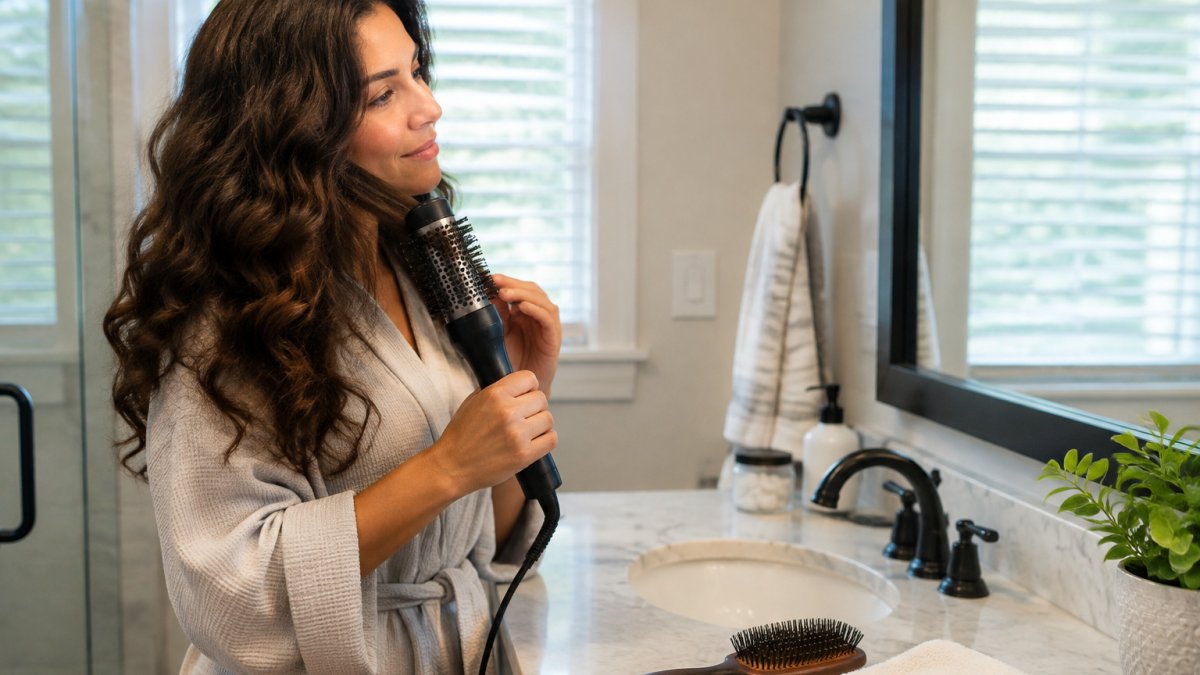
Hair Styling Tools for Curly Hair
Curly and coily hair responds best to diffusion and low, even heat. The Dyson Supersonic Hair Dryer in Nickel and Copper (refurbished with a 1 year Dyson warranty, $319.99) includes a diffuser engineered to disperse air more evenly around curls. It also has a wide-tooth comb attachment designed for curly and textured hair.
The Shark HyperAir IQ Curl-Defining Diffuser is listed among the IQ attachments for the Shark HD125C. If you are choosing a straightener for curly hair, use the lowest effective heat and test on a small section first.
Ceramic vs Titanium Hair Tools: Which Plate Material Fits You
The Dyson Corrale straightener uses flexing manganese copper alloy plates that shape around your hair. The Dyson Corrale Hair Straightener in Fuchsia and Nickel is listed at $329.99, refurbished with a 1 year warranty.
The Relaxus Straighten Out Digital Hair Straightener ($29.99) uses tourmaline ceramic plates and has a temperature control up to 450°F, along with a safety lock and auto shutoff.
Setting Safe Temperatures and Protecting Your Hair
Heat is the main source of styling damage, and temperature choice should follow your hair's condition and the tool in your hand, not a single number printed on the box. The ranges below are general starting points; adjust down if your hair is fine, porous or damaged, and up only if a section will not hold a shape at the lower setting.
Temperature Ranges by Hair Condition and Tool
- Fine, damaged or high-porosity hair: roughly 121°C to 149°C for flat irons and curling irons. Start at the bottom of the range.
- Medium, healthy hair: roughly 149°C to 177°C.
- Coarse, resistant or low-porosity hair: roughly 177°C to 204°C, used sparingly and with tension rather than repeated passes.
- Dryers: most styling is done on medium heat with high airflow; reserve the hottest setting for rough-drying thick hair, then drop to medium for finishing.
- Hot-air brushes and airflow stylers: follow the manufacturer's presets; these tools rely on airflow and tension more than plate temperature, so a lower setting often gives the same result with less risk.
A straightener rated to 450°F is not a recommendation to use 450°F. The maximum is a ceiling, not a target.
Heat Protection That Actually Helps
Apply a heat protectant to damp or dry hair before any hot tool, and let it dry fully before touching a plate or barrel to your hair. Water and hot plates do not mix well; damp sections under a straightener can cause steam damage and uneven results. Use the smallest amount that coats the section; overspray leaves residue that burns and dulls the finish.
Signs You Are Overheating Your Hair
Watch out: if you see steam, hear a sizzle, or smell a burnt odor, the tool is too hot or the section is too wet. Stop, let the hair cool, and lower the setting. Other warning signs include a section that feels brittle immediately after styling, visible split ends appearing faster than usual, and color fading more quickly in styled areas.
Habits That Reduce Cumulative Damage
- Rough-dry with a towel or low airflow before applying direct heat.
- Keep the tool moving; avoid holding a straightener or curling iron on one section for more than a few seconds.
- Use one pass per section where possible, and re-section rather than re-ironing the same piece.
- Turn tools off when you finish, and store them after they cool.
- Give hair a heat-free day between styling sessions when you can.
The Dyson Airstrait offers three pre-set temperatures for wet-to-dry styling, and the Dyson Supersonic includes a diffuser engineered to disperse air more evenly around curls. The Dyson Airstrait Straightener in Bright Nickel and Rich Copper is listed at $384.99, refurbished with a 1 year warranty.

Use this quick reference to match a temperature range to your hair's condition before you style.
| Hair condition | Starting temperature range | Note |
|---|---|---|
| Fine, damaged or high-porosity | Roughly 121°C to 149°C | Start at the bottom of the range |
| Medium, healthy | Roughly 149°C to 177°C | General starting point |
| Coarse, resistant or low-porosity | Roughly 177°C to 204°C | Use sparingly with tension |
| Dryers | Medium heat with high airflow | Reserve hottest setting for rough-drying |
| Hot-air brushes and airflow stylers | Manufacturer's presets | Often less risk at lower settings |
Pick Your Next Styling Tool From the Outlet
Once you know your hair type and styling goal, shortlist two or three tools from the list above and compare them against your budget. Home Essentials Outlet offers its own warranty on factory serviced items, and refurbished Dyson units are inspected to meet new-machine standards according to Dyson's listing. Browse our current selection and pick the tool that fits your routine.
Frequently Asked Questions
How do I choose the right hair styling tools for my hair type?
Start with your hair texture (straight, wavy, curly or coily), your density, and your strand thickness. Fine hair usually needs lower heat and lighter tools so it does not weigh down or get damaged. Thick or coarse hair often needs higher, consistent heat and tools with more power. Curly hair benefits from diffusers, wide-tooth attachments and barrels that preserve curl pattern. Once you know your hair type, match it to a tool whose heat range and attachments fit your goal, whether that is volume, smoothing or defined curls.
Is a ceramic or titanium hair tool better for my hair?
Ceramic plates heat evenly and gently, which suits fine or healthy hair and everyday styling. Titanium plates heat up faster and reach higher temperatures, which can help thick or coarse hair hold a style, but they need careful temperature control to avoid heat damage. The Dyson Corrale and RELAXUS Straighten Out, for example, rely on different plate designs.
What temperature should I use on my hair styling tools?
Use the lowest temperature that gets the style you want. Fine or damaged hair generally does best at lower settings, while thick, coarse hair may need a higher setting. The Dyson Airstrait offers three pre-set temperatures from 80°C to 140°C, and the Corrale offers 330°F, 365°F and 410°F. Test on one small section first and increase heat only if needed.
Do I need a heat protectant when using styling tools?
Yes, a heat protectant is worth using any time you style hair with a flat iron, curling iron or dryer set to high heat. Apply it to damp or dry hair before styling, following the product label, and keep tool contact brief.


