

Table of Contents
- CPO Outlets vs Rack to Door: What Actually Separates Them
- Direct Comparative Logistics: Shipping, Delivery Tracking, and Order Fulfillment
- Factory Reconditioned Power Tools: Grading, Testing, and What You Get
- Is Buying Refurbished Tools Worth It? Weighing Savings Against Risk
- Warranty Support and Return Policy: The Fine Print That Matters
- Best Places to Buy Discounted Tools: Inventory Depth and Selection
- Price Comparison and Bundled Savings: Where Your Money Goes Farthest
- Conclusion: Matching the Retailer to Your Project
- Frequently Asked Questions
Last Updated: October 4, 2026
CPO Outlets vs Rack to Door: What Actually Separates Them
When you search for discounted tools, CPO Outlets vs Rack to Door is the comparison that keeps coming up, and for good reason. Both names show up in the same searches, promise the same savings, and sell to the same buyer. The real difference is what happens after you click buy.
At Home Essentials Outlet, we sell factory-serviced appliances and brand-name home goods, so we watch this category closely. Here is the honest version: the two retailers separate on logistics, warranty fine print, and how deep their inventory actually runs. Those three things decide whether you save money or inherit a headache.
Below, we break down shipping and delivery tracking, refurbished grading, return policy, and where bundled savings really land. The goal is simple: help you match the retailer to your project instead of your mood.
Direct Comparative Logistics: Shipping, Delivery Tracking, and Order Fulfillment
Order fulfillment is where these two retailers diverge first, and it is the angle most comparison content skips. Instead of vague claims about "fast shipping," break the decision into five logistics dimensions that actually change your landed cost and your recourse if something goes wrong.
1. Fulfillment model. A centralized outlet model ships from one warehouse or a small number of distribution points, so a multi-item order tends to travel as one shipment with one tracking number.
2. Shipping cost transparency. The practical test is whether freight is calculated at checkout or quoted after the order. When shipping is confirmed at checkout, your landed cost is locked before you pay.
3. Tracking granularity. Centralized fulfillment usually issues one tracking number per order. Distributed fulfillment issues one per item or per seller. If a shipment goes missing, the per-order model gives you a single support thread; the per-item model can bounce you between parties.
4. Return freight. This is the line most shoppers miss. Some policies cover return shipping on defective or misdescribed items; others make you pay freight both ways.
5. Inventory availability. A centralized outlet typically shows real-time stock on its own site. A marketplace catalog may show a listing as available while the underlying seller is out of stock, which delays fulfillment. Confirm the item is in stock at the seller level, not just listed.
A practical checklist before you order from either:
- Confirm the total landed cost, including shipping, before checkout
- Check whether tracking is issued per item or per order
- Note the return window and who pays return freight
- Confirm the item is in stock at the fulfillment level, not just listed
- Save the order confirmation, listing description, and warranty terms in one folder
That last point is the one people skip. Then they need it.
Factory Reconditioned Power Tools: Grading, Testing, and What You Get
Factory reconditioned power tools are units returned to the manufacturer, inspected, tested against original specifications, and resold with a warranty. They are not the same as used tools, and they are not the same as new ones. The grading and testing behind that label is what you are actually buying.
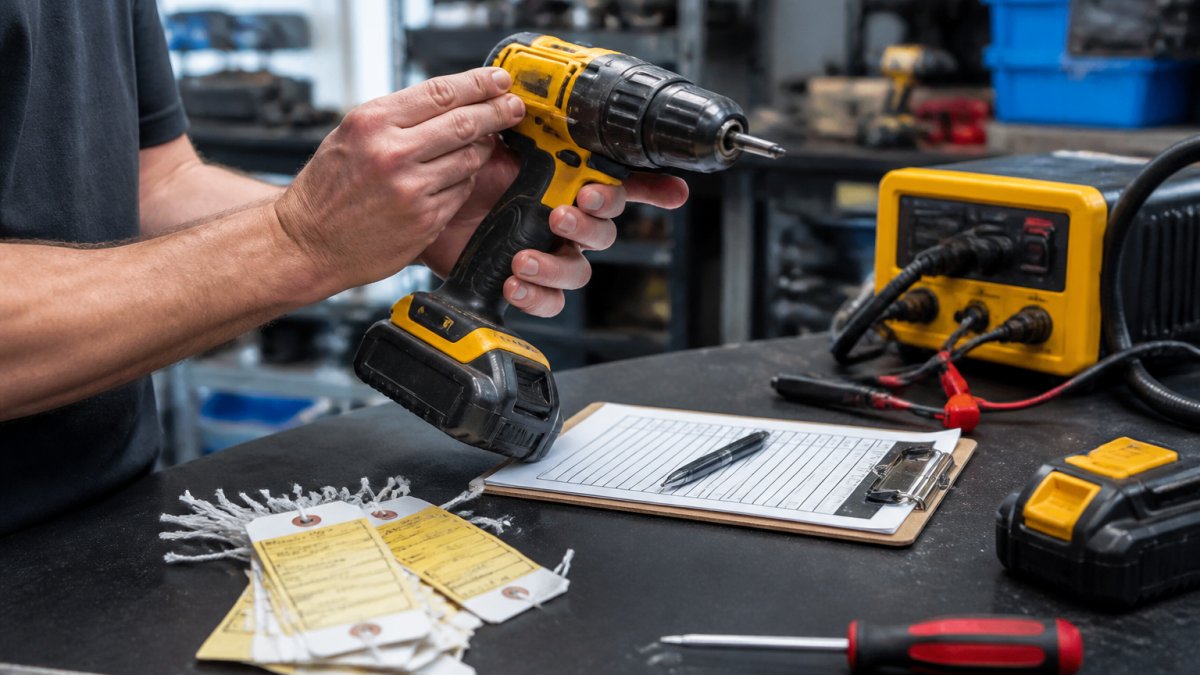
A common mistake is assuming "refurbished" means one consistent standard. It does not. Quality recertified products pass a rigorous inspection and dozens of tests to meet manufacturer specifications, and they may carry minor cosmetic blemishes. The internals are the point. The scuffs are not. Prioritizing these functional standards ensures that certified refurbished electronics deliver the same reliable performance as their new counterparts despite their previous history.
When you evaluate any factory-serviced tool, ask three questions:

- Was it tested to manufacturer specifications, or just cleaned and resold?
- What warranty length comes with it, and who honors it?
- Are cosmetic blemishes disclosed before purchase?
If a listing cannot answer all three, treat the discount as a warning sign rather than a deal.
Is Buying Refurbished Tools Worth It? Weighing Savings Against Risk
Is buying refurbished tools worth it? For most budget-conscious buyers, yes, provided the unit is factory-serviced, tested, and covered by a clear warranty. The savings are real, and the risk is manageable when you know what to check.
The risk shows up in three places. First, cosmetic condition: a unit may arrive with blemishes that do not affect performance. Second, warranty length: coverage varies widely, from 30 days to 90 days and beyond. Third, support: some retailers make returns easy, others make you ship the item back at your own cost.
Weighing it out, the math usually favors refurbished for anyone who does not need the latest model on day one. A factory-serviced appliance or tool that meets manufacturer specs will do the same job as a new one for less money. What you trade is certainty about cosmetics, not capability.

Warranty Support and Return Policy: The Fine Print That Matters
Warranty support and return policy are the two lines most shoppers skim and later regret. Read them before you buy, not after something breaks.
Here is what to look for in plain terms:
T-FAL EY505850 Easy Fry Air Fryer & Grill 2 in1 XL Air Fryer →
| What to Check | Why It Matters | What Good Looks Like |
|---|---|---|
| Warranty length | Determines your coverage window | 30 to 90 days minimum on refurbished |
| Who honors it | Affects how easy a claim is | Retailer-backed, single point of contact |
| Return window | Your exit if the item disappoints | Clear window, stated up front |
| Return shipping | Decides your real cost of returning | Stated policy, no surprises |
| Cosmetic disclosure | Sets expectations on arrival | Blemishes noted before purchase |
| Claim channel | Determines how fast you get resolution | Online portal or phone line, not email-only |
How a warranty claim actually works. A retailer-backed warranty means you open a ticket with the retailer, who either repairs, replaces, or refunds. A manufacturer-backed warranty means you deal with the manufacturer's service network, which can mean shipping the unit to a service center and waiting on parts.
Damaged goods on arrival. The standard process is: photograph the damage before discarding packaging, report within the stated window (often 48 to 72 hours for visible damage), and request either a replacement or a refund.
Missing shipments. If tracking shows delivered but nothing arrived, the first step is a carrier trace, which the retailer usually initiates. If tracking never updates, the retailer files a lost-parcel claim with the carrier.
Return shipping costs. Some policies cover return freight on defective or misdescribed items; others make you pay both ways. A "free returns" banner often excludes oversized items like tool chests and stationary power tools, where freight can run into the hundreds of dollars. Read the oversized-item exclusion before assuming returns are free.
A warranty is only as good as the process behind it. A 90-day warranty with a clear claim path beats a longer warranty buried in fine print.
Best Places to Buy Discounted Tools: Inventory Depth and Selection
The best places to buy discounted tools are the ones with deep, rotating inventory and transparent condition grading. Inventory depth is the angle most comparison articles skip, and it is the one that decides whether a retailer is worth a second visit.
Shallow inventory means the same shelf every time. Deep inventory means new stock cycles through, so a trip is not wasted. For outlet shoppers, that rotation is the whole appeal.
When judging a retailer's inventory, look at:
- Breadth: Does it carry power tools, appliances, and housewares, or just one category?
- Depth: Are there multiple options within a category, or a single unit?
- Rotation: Does stock turn over, or does the same item sit for months?
- Grading clarity: Is condition stated per item, or left vague?
Home Essentials Outlet is built around this model. We run a continuously updated inventory of brand-name goods, from power tools and lawn equipment to small appliances and housewares, with our own warranty on factory-serviced items. That mix of breadth and rotation is what keeps a trip worth making.

Price Comparison and Bundled Savings: Where Your Money Goes Farthest
Price comparison is not just about the sticker. It is about the total cost: unit price, shipping, warranty value, and whether a bundle lowers your per-item cost.
Bundled savings are where budget shoppers win most. Buying a tool with its accessories, or pairing appliances in one order, often beats hunting the lowest single-unit price. The catch is that bundles only save money if you actually need every item in them.
A simple way to compare:
- List the total landed cost for each option, including shipping.
- Add the value of the included warranty.
- Subtract the cost of accessories you would otherwise buy separately.
- Compare the final number, not the headline price.
For example, a factory-serviced air fryer toaster oven at $49.99 with a 30-day warranty may land cheaper overall than a slightly lower-priced unit with no coverage and paid return shipping. The math only works when you count everything.
Conclusion: Matching the Retailer to Your Project
The right retailer depends on your project, not on brand loyalty. If you need deep inventory, rotating stock, and a warranty you can actually use, an outlet model with centralized fulfillment and retailer-backed coverage is the safer bet. If you only need one item and you have already confirmed the fine print, either route can work.
Home Essentials Outlet carries brand-name power tools, lawn equipment, small appliances, and housewares at outlet prices, with our own warranty on factory-serviced items and a +1 Guarantee for purchase protection. Our inventory updates continuously, so there is always something new to find.
Shop Deals with Home Essentials Outlet and get brand-name quality without paying full retail.
Frequently Asked Questions
What is the difference between factory-reconditioned and new tools?
Factory-reconditioned tools are items returned to the manufacturer, inspected, tested against original specifications, and restored to working condition. They may carry minor cosmetic blemishes but perform like new. New tools come straight from the production line with no prior handling. Both can carry a warranty, though the coverage length varies by retailer and product. At Home Essentials Outlet, factory-serviced items are backed by the Home Essentials Warranty, giving you protection without paying full retail for a brand-new unit.
Are CPO outlet tools covered by a manufacturer warranty?
Warranty coverage for discounted tools depends on the retailer and the specific product condition. Some factory-reconditioned items carry the original manufacturer warranty, while others carry a shorter term or a retailer-backed guarantee. Always check the product listing before buying. At Home Essentials Outlet, factory-serviced products come with the Home Essentials Warranty, and the +1 Guarantee adds purchase protection. That means if something fails within the covered period, you have a clear path to resolution rather than being stuck with a dead tool.
What does 'rack to door' mean in the context of tool retail?
Rack to door describes a fulfillment model where products ship directly from a warehouse rack to your address, skipping a retail storefront. This can reduce overhead costs and sometimes lower prices, but it also means you cannot inspect the item in person before it arrives. Shipping costs, delivery timelines, and return logistics become the main trade-offs. Compare those factors carefully against outlet models that may offer in-person pickup or local return options.
What should I look for when buying discounted power tools online?
Check four things: the condition grade (new, factory-reconditioned, or refurbished), the warranty length and who backs it, the return policy including who pays return shipping, and whether the listing confirms all original accessories are included. Also verify the voltage and plug type match your region. A tool without its battery, charger, or manual can cost more to complete than the discount saves. Reading user reviews and checking inventory availability before ordering helps avoid disappointment.


