

Table of Contents
- What Are Factory Seconds? A Quick Definition
- Cosmetic Flaws vs. Functional Defects: What to Look For
- Factory Seconds vs Refurbished: Key Differences
- Your Pre-Purchase Inspection Checklist
- Inspecting Refurbished Power Tools: What Matters Most
- Factory Seconds Warranty Coverage and Consumer Protection
- Pros and Cons of Buying Factory Seconds
- Frequently Asked Questions
Last Updated: September 28, 2026
What Are Factory Seconds? A Quick Definition
Factory seconds are brand-name products pulled from the main retail line because of cosmetic flaws or damaged packaging, then sold at a lower price. The product inside still works as intended. At Home Essentials Outlet, we sell these items every day, and the question we hear most is simple: how do you spot quality factory seconds before you pay?
Here is the short answer. A factory second is a genuine product with a minor cosmetic imperfection, such as a scratch, dent, or blemished box, that failed the manufacturer's visual inspection but passed functional testing. The Competition Bureau's guide to misleading pricing claims makes one thing clear: a discount only means something if the original price was real. So the first skill in judging factory seconds is knowing what you are actually comparing.
Most buyers assume "second" means "broken." That is wrong, and it costs them money.
Cosmetic Flaws vs. Functional Defects: What to Look For
The line between a cosmetic flaw and a functional defect decides whether a factory second is a bargain or a mistake. Cosmetic damage affects how a product looks. Functional defects affect how it works. Only one of those should stop you from buying.
Common Cosmetic Imperfections
These are the flaws that make an item a second in the first place:
- Light scratches on an exterior finish
- Small dents on a corner or base
- Scuffs from handling or shelf wear
- Damaged or torn packaging
- Faded print on a label or box
- Ex-display models with minor marks
Red Flags for Functional Defects
Walk away when you see these:
- Cracks in a structural component, not just the surface
- A power cord with exposed or frayed wiring
- Buttons, switches, or seals that do not respond
- Strange smells, rattles, or grinding sounds
- Missing parts that the product needs to run
- Water damage or corrosion on metal contacts
A common mistake is treating every mark as a dealbreaker. The real skill is telling aesthetic damage from a problem that will cost you later.
Factory Seconds vs Refurbished: Key Differences
Factory seconds and refurbished items are not the same thing, and mixing them up leads to bad buys. Factory seconds were never used. Refurbished products were returned, then inspected and restored to working order.
Here is how the two compare:
| Factor | Factory Seconds | Refurbished |
|---|---|---|
| Condition | New, minor cosmetic flaw | Used, restored to spec |
| Testing | Passed functional checks | Re-inspected and retested |
| Typical flaw | Scratch, dent, blemished box | Wear from prior use |
| Warranty | Varies by seller | Often included |
| Price | Lower than retail | Lower than retail |
Your Pre-Purchase Inspection Checklist
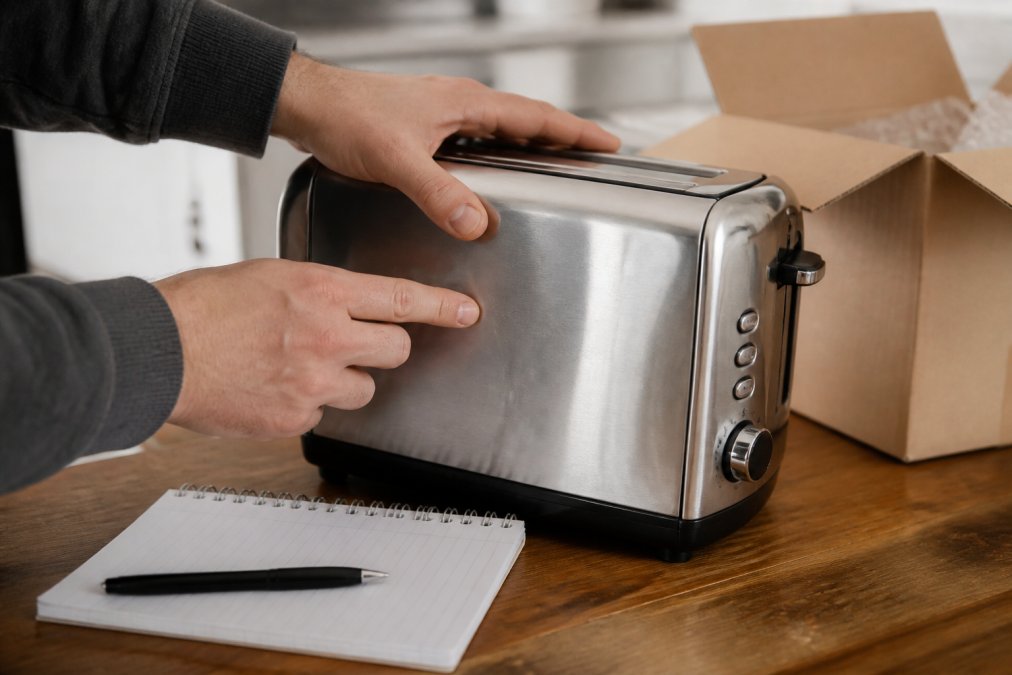
Use this checklist before you buy any discounted item. It works online and in person, and it takes about five minutes. The key upgrade most buyers miss is grading the flaw before they grade the price.
Grade the Flaw First: A Simple A/B/C Framework
Most sellers do not publish a grading scale, so build your own. This framework turns a vague "minor cosmetic flaw" into a decision you can defend.
| Grade | What it looks like | Typical impact | Buy if... |
|---|---|---|---|
| Grade A | Flaw is on packaging only, or a single hairline scratch on a hidden surface | None on function or visible appearance in normal use | You want the deepest discount with almost no downside |
| Grade B | Visible scratch, scuff, or small dent on an exterior surface | Cosmetic only; noticeable on close inspection | You can live with the mark or hide it (corner, base, back panel) |
| Grade C | Multiple cosmetic flaws, deep dent, or damage near a seam, hinge, or moving part | Cosmetic, but worth verifying it has not compromised structure | You can inspect in person and confirm no functional issue |
Exterior Finish and Structural Integrity
Start with your eyes and hands.
- Run your fingers along edges and corners for dents.
- Check the exterior finish under good light, not dim light.
- Press on the frame or housing to feel for flex or cracks.
- Look at seams, hinges, and joints for gaps.
- Confirm the flaw is surface-level, not structural.
For appliances, pay extra attention to the door seal, the hinge alignment, and the base. A dent on a refrigerator door is cosmetic; a dent that misaligns the seal is not. For cookware, check the rim and the handle rivets. A scratched pan body is fine; a loose handle is not.
CHI LAVA 11610C Handheld Garment →
Serial Number Verification and Performance Testing
Then confirm the product is real and working.
- Find the serial number and check it against the listing or box.
- Power the unit on and run it through a full cycle.
- Test every button, switch, and setting.
- Listen for odd noises and check for heat or vibration.
- Ask what the return policy covers before you pay.
For online purchases, ask the seller for a photo of the actual flaw and the serial number before you commit. A listing that shows only stock photos is a listing that has not been inspected.
Inspecting Refurbished Power Tools: What Matters Most
Refurbished power tools need a harder look than most products because they take real abuse. A drill or saw that was returned may have hidden wear. When inspecting refurbished power tools, focus on the parts that fail first: the motor, the chuck or blade mount, the cord, and the battery contacts.
Factory Seconds Warranty Coverage and Consumer Protection
Factory seconds warranty coverage varies by seller, so read the terms before you buy. Some sellers offer a full manufacturer warranty. Others back the item with their own. Home Essentials Outlet backs its factory serviced items with the Home Essentials Warranty, so you know what you are getting.
What Your Rights Actually Cover
Consumer protection in this country is mostly provincial, with a federal layer on top. The practical takeaway is that you have stronger rights than most buyers assume, even on discounted goods.
- Accurate description. Under Canadian consumer protection law and provincial consumer protection acts, a seller cannot describe a used or flawed item as "new" or "perfect." If the listing says "blemished package with full warranty," that is a claim you can hold them to.
- No misleading pricing. The Competition Bureau's guide to misleading pricing claims applies here too. A "50% off" tag is only lawful if the original price was genuinely offered. A fake reference price is a deceptive practice.
- Substantial performance. Most provincial sale-of-goods legislation implies a condition that goods be fit for their ordinary purpose. A factory second with a cosmetic flaw still has to work. If it does not, the cosmetic-flaw framing does not excuse it.
- As-is sales. Some sellers try to sell seconds "as-is" to waive these protections. In most provinces, a business cannot contract out of its statutory obligations to a consumer, even with a signed waiver. A private sale between individuals is different, there, "as-is" usually does mean what it says.
Warranty vs. Your Statutory Rights
A manufacturer or seller warranty is a voluntary promise on top of your legal rights. It does not replace them. If a seller's warranty says "cosmetic flaws not covered," that is fine, but it cannot also say "functional defects not covered" and expect to override your statutory rights.
Pros and Cons of Buying Factory Seconds
Buying factory seconds pays off when you know what you are getting. The savings are real, but so are the trade-offs.
Pros:
- Big price reduction on brand-name goods
- Same performance as the full-price version
- Wide choice of appliances, tools, and housewares
- A warranty often still applies
Cons:
- Cosmetic flaws you cannot always see online
- Limited stock that changes fast
- Warranty terms vary by seller
- Returns can be harder than at full price
Frequently Asked Questions
What is considered a factory second?
A factory second is a brand-new item that did not meet the manufacturer's strict cosmetic standards. It may have minor scratches, dents, or packaging damage, but it is fully functional. These items are sold at a discount from the retail price. At Home Essentials Outlet, factory seconds are quality recertified and backed by a warranty.
Is it worth buying factory seconds for power tools?
Yes, if you inspect them carefully. Factory seconds for power tools can offer significant savings on premium brands. Check for functional defects like unusual noises, vibration, or overheating. Verify the warranty and return policy. A factory second with only cosmetic blemishes can be a great value for DIY enthusiasts.
Are factory seconds covered by standard manufacturer warranties?
Warranty coverage varies. Some factory seconds come with a full manufacturer warranty, while others may have a limited warranty or be sold as-is. Always check the warranty terms before buying. At Home Essentials Outlet, factory serviced items include a Home Essentials Warranty, and blemished package items often carry a full manufacturer warranty.
How can you tell the difference between a cosmetic blemish and a functional defect?
Cosmetic blemishes are surface-level issues like scratches or dents that do not affect performance. Functional defects impact how the item works, such as a motor that won't start or a heating element that fails. Test all functions before purchase. If you cannot test it, buy from a seller with a solid return policy.
Factory seconds reward buyers who inspect before they pay. The challenge is finding a seller who is honest about condition and backs what they sell. Home Essentials Outlet is a true brand-name manufacturer's outlet, offering a lowest price guarantee and the Home Essentials Warranty on factory serviced items, plus a +1 Guarantee for purchase protection. Browse the deals and spot your next bargain with confidence.


