

Table of Contents
- Step 1: Gather Your Proof of Purchase and Product Documentation
- Step 2: How to Find Your Appliance Serial Number and Model Number
- Step 3: Check Warranty Registration and Coverage Period
- What Does a Standard Appliance Warranty Cover?
- Step 4: How to File an Appliance Warranty Claim
- Extended Protection Plans vs. Manufacturer Warranties
- Warranty Transferability and Cross-Border Limitations
- Frequently Asked Questions
Last Updated: September 27, 2026
Step 1: Gather Your Proof of Purchase and Product Documentation
Verifying appliance warranty coverage starts with paperwork: without a receipt or order confirmation, most manufacturers cannot confirm when coverage began.
Here is what to collect before you contact anyone:
- Original receipt or digital order confirmation
- Credit card or bank statement showing the purchase
- Delivery slip or installation invoice
- Any warranty card that came in the box
- Photos of the product label and packaging
Competition Bureau guidance on warranty and receipt rights
Step 2: How to Find Your Appliance Serial Number and Model Number
Your serial and model numbers identify your exact unit: the model tells the manufacturer what you bought, the serial tells them when and where it was made.
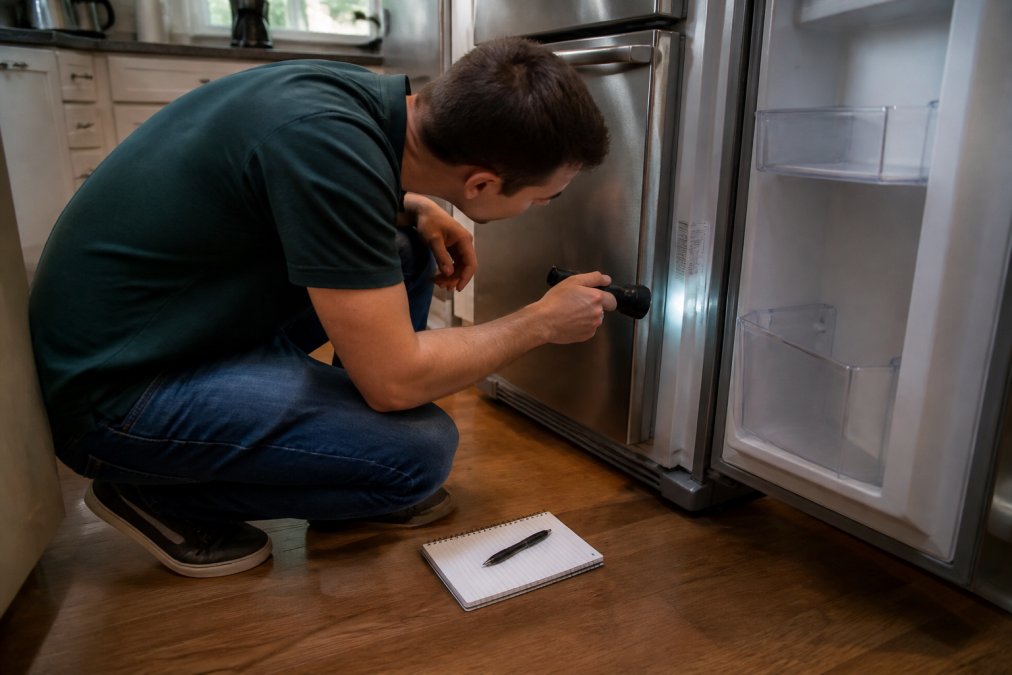
Where to Look on Common Appliances
Here is where to check the most common appliances:
- Refrigerators: Inside the door frame, behind the crisper drawer, or on the back panel
- Washers and dryers: Door opening, behind the lint filter, or on the rear panel
- Dishwashers: Along the door edge or on the side of the inner tub
- Ovens and ranges: Inside the oven door, on the storage drawer, or behind the control panel
- Microwaves: Back panel or inside the door frame
- Small appliances: Bottom of the base or inside the battery compartment
The label may show "S/N" for serial and "Model" or "MOD" for the model. Write both down exactly, one wrong digit can stall your claim.
Step 3: Check Warranty Registration and Coverage Period
Most manufacturers let you check warranty registration through their online portal: enter your model and serial number and the system returns your coverage period and expiration date.
To check your status:
- Visit the manufacturer's support page
- Enter your model and serial number
- Confirm your purchase date and retailer
- Save or screenshot the result
What Does a Standard Appliance Warranty Cover?
A standard appliance warranty covers defects in materials and workmanship for a set period, a promise the product will work as advertised under normal use.
Parts and Labor: What's Included
Parts and labor are the two core pieces of most warranties: parts covers replacement components, labor covers the technician's time to install them.
- Full warranty: Covers parts and labor for the full term
- Limited warranty: Covers only what the document lists
- Parts-only warranty: You pay for the technician's time
- Labor-only warranty: You pay for the parts
What's Typically Excluded
Most warranties exclude the same handful of things. Knowing these upfront saves a frustrating phone call.
- Damage from misuse, drops, or spills
- Cosmetic damage like scratches and dents
- Normal wear on filters, belts, and bulbs
- Improper installation or voltage issues
- Repairs by unauthorized technicians
- Commercial use of a residential product
Step 4: How to File an Appliance Warranty Claim
Filing a claim in order prevents delays: have your documents ready before you call and keep a written record of every interaction.
Here is how to file an appliance warranty claim:
- Confirm your coverage is still active
- Gather your proof of purchase, model, and serial numbers
- Describe the fault clearly and note when it started
- Contact the manufacturer's support line or online portal
- Get a claim or reference number
- Book the service call with an authorized repair center
- Keep every email, receipt, and service note
What to Have in Front of You Before You Call
The first call usually stalls when a caller cannot answer basic questions. Have these ready:
- Model number and serial number, read exactly from the label
- Purchase date and the retailer's name
- Proof of purchase, either the receipt or a card statement
- A one-sentence description of the fault and when it first appeared
- Whether the unit was professionally installed, and by whom
- Any error codes shown on the display
Getting a Claim or Reference Number
Never end a call without a claim or reference number, it ties your call to the file if you follow up. Write it on the receipt and store it with your documents.
In-Home Service, Shipping, and Turnaround
Ask about the service model before you agree to anything:
- In-home service: Standard for refrigerators, ranges, washers, and dryers. The technician comes to you.
- Depot or ship-in service: Common for microwaves and small appliances. You may pay shipping one way, so ask who covers it.
- Carry-in service: You bring the unit to an authorized center. Keep the drop-off receipt.
If the Claim Is Denied
A denial is not always final. Work through these steps in order:
- Ask for the denial in writing, with the specific exclusion clause cited
- Check that clause against your owner's manual and warranty document
- If the denial rests on installation or misuse, gather your installation invoice or a technician's written opinion
- Ask for a supervisor review and reference your claim number
- If the brand still refuses, put your complaint in writing and keep a copy
Competition Bureau guidance on warranty and receipt rights
ROWENTA DR8820U1 Pure Force 2in1 →
Keep a Claim Log
Start a simple log the day you open a claim. One line per contact:
- Date and time
- Name of the agent or technician
- What was said or agreed
- The next step and who owns it
Troubleshooting Before You Call
Try basic troubleshooting first, many "faults" are simple fixes, and an unnecessary service call can cost you a fee.
- Check that the unit is plugged in and the breaker is on
- Reset the appliance by unplugging it for 60 seconds
- Confirm settings and cycle selections are correct
- Clean filters, vents, and drain lines
- Check the door latch or lid switch on washers and dryers
Extended Protection Plans vs. Manufacturer Warranties
Extended protection plans are optional add-ons that begin after the manufacturer warranty ends, not the same thing as the warranty included with your appliance.
| Feature | Manufacturer Warranty | Extended Protection Plan |
|---|---|---|
| Cost | Included | Paid add-on |
| Start date | Purchase date | After factory warranty ends |
| Typical length | 1 year | 2-5 years |
| Covers wear and tear | No | Often yes |
| Service provider | Manufacturer | Third-party or retailer |
| Best for | Every buyer | High-cost appliances you plan to keep |
Warranty Transferability and Cross-Border Limitations
Warranty transferability is one of the most misunderstood parts of appliance coverage. The default rule: a manufacturer warranty belongs to the original buyer, not the appliance, so it usually does not come with the unit when it changes hands unless the warranty document says it does.
What a Transfer Clause Actually Says
Manufacturer warranties fall into three broad patterns:
- Non-transferable: Coverage ends with the original buyer. This is the most common pattern.
- Transferable with notice: The new owner must contact the brand, provide proof of the original purchase, and sometimes pay a transfer fee within a set window.
- Transferable on its face: The warranty document does not name the buyer, so coverage follows the unit. Rare, but it exists on some premium brands.
If the document is silent on transfer, treat it as non-transferable.
Buying a Used Appliance: A Transfer Checklist
Before money changes hands, work through this list:
- Ask the seller for the original receipt or a copy
- Ask for the model and serial numbers and photograph the label yourself
- Call the manufacturer's support line with those numbers and ask two questions: is the unit still under warranty, and is the warranty transferable to a new owner?
- Ask what documentation the brand needs to process a transfer, and whether a fee applies
- Get the brand's answer in writing, by email, before you buy
- If the seller bought an extended protection plan, ask whether that plan is transferable separately. Many are, on payment of a fee.
A seller who cannot produce a receipt is not necessarily selling a bad appliance, but price the deal as if there is no warranty at all.
Selling or Gifting an Appliance
If you are passing the appliance on, hand the next owner a small package:
- A copy of the original receipt
- The model and serial numbers written down
- The owner's manual, or a link to the digital version
- Any service records from repairs done under warranty
- A note stating whether the warranty is transferable and what steps the new owner must take
Cross-Border Limitations
A warranty is issued for the market where the appliance was sold. Move it to another country, or buy one abroad and bring it home, and the manufacturer may refuse service, charge you for parts, or direct you to a service center in the country of purchase.
- Confirm in writing whether the warranty is valid in your new location
- Ask whether the brand has authorized service centers near you
- Ask who pays for parts and labor if service is honored as a courtesy rather than an obligation
- Keep digital copies of every document, including the original receipt and the warranty terms
Where Consumer Protection Law Fits
Manufacturer warranty terms do not exist in a vacuum. Provincial and territorial consumer protection legislation sets minimum standards for written warranties that can override a clause a manufacturer would prefer to rely on. The rules differ by province and territory, so specifics depend on where you bought the appliance.
Two practical points follow from this:
- A written warranty must generally be made available to you before or at the time of sale. If you never received the terms, that is worth raising with the brand and, if needed, with your provincial or territorial consumer affairs office.
- Statutory warranty rights can exist alongside a manufacturer warranty. A manufacturer's refusal does not automatically end your options, particularly where the appliance was not of acceptable quality or did not match its description.
Innovation, Science and Economic Development Canada consumer product safety
Digitize Everything
At Home Essentials Outlet, every factory serviced item comes backed by our own warranty. That means you get clear coverage details up front, plus the +1 Guarantee for extra purchase protection. It takes the guesswork out of what is covered and what is not.
Frequently Asked Questions
How can I check if my appliance is under warranty?
Start by locating your model and serial number, usually found on a sticker behind the door, on the back panel, or near the power cord. Then check your receipt or order confirmation for the purchase date. Most manufacturer warranties run 12 months from purchase for parts and labor. If you registered the appliance, log into the manufacturer's online portal to view your coverage period and claim status. Without registration, your receipt still serves as proof of purchase.
Can I check a warranty without a receipt?
Sometimes. If you paid by credit card, your statement or order confirmation can act as proof of purchase. Some manufacturers also accept the date of manufacture on the serial plate as a fallback, though this usually shortens your coverage window. For appliances bought through Home Essentials Outlet, your order confirmation email serves as your receipt, so keep it saved. Without any proof of purchase, most manufacturers will not honor a claim.
Does a manufacturer's warranty cover labor and parts?
Most standard manufacturer warranties cover both parts and labor for the first year. After that, many switch to parts-only coverage for the remaining period. A limited warranty may exclude certain components like cosmetic parts, filters, or consumables. Always read the coverage details in your owner's manual or warranty card. If you bought a factory-serviced item, check whether the warranty comes from the manufacturer or the retailer, since terms differ.
What information do I need to verify an appliance warranty?
You will need your model number, serial number, proof of purchase (receipt, order confirmation, or credit card statement), and the purchase date. If you registered the product, have your registration confirmation handy. For a claim, you may also need a description of the issue and photos. Having these ready before you call customer support speeds up the process and helps the service technician confirm your coverage without delays.


