

Quick Summary
Start with a cordless drill/driver, then add an impact driver, ideally as a combo kit with two batteries and a charger. These power tools cover furniture assembly, hanging shelves, TV mounts, and most fastener jobs, so buy the rest only as projects demand them.
- Buy in tiers: drill/driver, impact driver, and a bit set cover most first-month jobs.
- Choose a compact 18V or 20V brushless drill with a 1/2-inch chuck and two batteries.
- Add a circular saw and shop vacuum in your first year for shelving and drywall work.
- Rent tools you will use once, like a tile saw or floor sander, instead of buying.
- Stay on one battery platform, since batteries and chargers only work within one brand's system.
Table of Contents
- Start With the Tools That Earn Their Space
- Must-Have Power Tools for DIY Projects
- The Best Cordless Drill for Homeowners
- Cordless Drill Problems and Fixes
- Power Tool Safety Tips for Beginners
- Battery Platforms and What Ownership Really Costs
- Rent, Borrow, or Buy: Matching Tools to Your Home
- Shop Refurbished Power Tools at Home Essentials Outlet
- Frequently Asked Questions
Start With the Tools That Earn Their Space
Last Updated: October 26, 2026
Most new homeowners buy too many power tools too fast. The smarter approach is to buy the small set of tools that earn their bench space, then add only when a project demands it.
Start with a drill/driver. It handles the widest range of home repairs: drilling holes, tightening screws, removing screws, assembling furniture, hanging hardware, and driving fasteners into studs.
The rest of the essential power tools for new homeowners fall into a clear priority order.
Canada Safety Council home safety resources
Must-Have Power Tools for DIY Projects
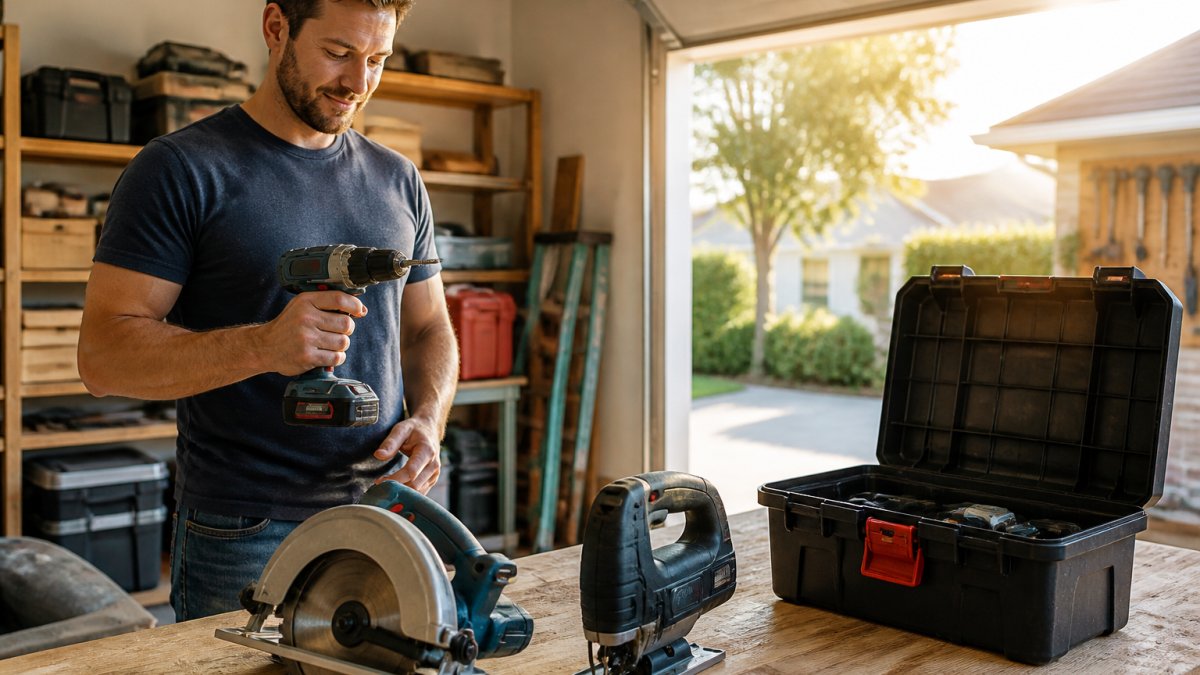
Here is the short list we recommend building toward, in priority order, with what each tool actually does and the specification that matters most when you buy:
- Cordless drill/driver - the workhorse for drilling and driving. Look for a 1/2-inch chuck, two-speed gearbox, and clutch settings. A compact 18V or 20V brushless model covers wood, drywall, and light metal.
- Impact driver - for long screws and stubborn fasteners. It delivers rotational impacts rather than steady torque, so it drives 3-inch deck screws without stripping heads. Buy it as part of a combo kit with the drill.
- Circular saw - straight cuts in lumber and sheet goods. A 7-1/4-inch blade with a carbide-tipped combination blade handles framing lumber and plywood; a 6-1/2-inch model is lighter for trim and shelving.
- Jigsaw - curved cuts and cutouts. Variable speed and orbital action help with outlet boxes, sink cutouts, and plunge cuts into installed material.
- Oscillating multi-tool - flush cuts, sanding, scraping, grout removal. The tool shines where nothing else fits: undercutting door jambs, trimming installed trim, and cutting nails flush.
- Random orbit or palm sander - smoothing wood and patching drywall. A 5-inch random orbit sander with dust collection is the most forgiving for beginners because it resists swirl marks.
- Shop vacuum - cleanup and dust collection. A 5- to 6-gallon wet/dry vac with a hose that fits your sander and saw ports keeps fine dust out of living space.
- Work light or flashlight - dark corners, under sinks, power outages. A rechargeable LED work light on the same battery platform as your drill saves outlets and cords.
Build in Tiers, Not All at Once
Most new homeowners do not need all eight tools on day one. A practical way to sequence purchases is by budget tier and project type:
- Minimum starter set (first month): drill/driver, impact driver, and a bit set. This covers furniture assembly, hanging shelves, TV mounts, curtain rods, and most fastener jobs. A combo kit with two batteries and a charger is the most economical entry point.
- First expansion (first year): add a circular saw and a shop vacuum when you start building shelving, cutting plywood, or doing drywall patching. The vacuum also protects your indoor air during sanding and sawing.
- Detail tier (as projects demand): jigsaw, oscillating multi-tool, and sander. These are the tools you buy when a specific job calls for a curved cut, a flush cut, or a smooth finish.
A common pattern is that homeowners who buy the full list upfront end up with tools that sit unused for a year, while those who buy in tiers spend less and still finish their projects. Match the tier to your home: an older house with plaster and original trim will pull the multi-tool and jigsaw forward, while a newer condo may stay in the minimum tier for a long time.
Drills and Drivers: The First Purchase
A drill/driver is a cordless tool that rotates a bit or driver bit to bore holes and set screws. Buy a combo kit if you can: you get a drill for drilling and an impact driver for driving, and the pair covers almost every fastening job in a house. Our pick for a first purchase is the DEWALT 20V MAX drill and impact driver combo kit, which includes both tools, two batteries, and a charger.

Saws for Straight and Curved Cuts
A circular saw makes straight cuts in lumber, plywood, and trim. A jigsaw handles curved cuts, cutouts for outlets, and plunge cuts. If you can only buy one saw first, buy the circular saw, since most structural and shelving work needs straight cuts. A jigsaw is the better second saw for detail work.
Sanders, Multi-Tools, and Cleanup
Sanding and detail work come later in the build-out. A palm sander smooths patched drywall and prepped wood. An oscillating multi-tool cuts flush, removes grout, and scrapes adhesive where nothing else fits. A shop vacuum keeps dust out of your living space, which matters more than most beginners expect.
The Best Cordless Drill for Homeowners
The best cordless drill for homeowners is a compact 18V or 20V brushless model with two batteries and a 1/2-inch chuck. That combination covers drilling in wood, drywall, and light metal, plus everyday driving, without the weight of a full-size hammer drill. Buy brushless if the budget allows; the motor runs cooler and lasts longer.
For a straightforward first drill, the DEWALT 20V MAX compact drill/driver kit is a solid fit. It ships with two batteries, a charger, and a bag, and the compact body fits into tight spaces like cabinet interiors. If you expect to drill into brick or concrete, step up to a hammer drill instead.

For more buying advice and specific picks, see our guide to the best cordless drill for home use.
Cordless Drill Problems and Fixes
Most cordless drill problems trace back to the battery, the chuck, or the trigger, and most have a simple fix. A drill that won't start usually has a depleted or poorly seated battery.
- Battery won't charge: check the contacts for dust, reseat the pack, and try a second charger if you have one.
- Chuck won't hold the bit: tighten firmly by hand, and replace badly worn bits.
- Drill stalls in masonry: switch to a hammer drill or a masonry bit; a standard drill isn't built for it.
Watch out: forcing a stalled drill can burn out the motor or strip the chuck. Stop, check the bit and material, and adjust before you push harder.
Power Tool Safety Tips for Beginners
Power tool safety tips for beginners start with three habits: wear eye protection, keep the work secured, and unplug or remove the battery before changing blades or bits. Most workshop injuries come from a workpiece that shifted, a guard that was removed, or a blade that was changed while the tool was still live.
DEWALT 20V MAX* Cordless Drill and Impact Driver, Power Tool Combo Kit →
- Wear safety glasses every time, even for a "quick" cut.
- Clamp your workpiece; never hold it by hand.
- Keep guards in place and let the blade reach full speed before cutting.
Electrical Safety Authority guidance on home electrical work
Battery Platforms and What Ownership Really Costs
The real cost of cordless power tools isn't the first purchase, it's the battery platform you commit to. Batteries and chargers are the expensive, recurring part, and they only work within one brand's system. Choosing a platform early and staying on it saves money over time, because every new bare tool you buy can share the packs you already own.
What the Numbers on the Battery Mean
Two specifications decide whether a battery suits a tool:
- Voltage sets the power class. An 18V and a 20V MAX pack are functionally the same class of tool; the higher number is a marketing label, not a different system. Higher-voltage platforms (36V and up) exist for heavy outdoor equipment and are overkill for most indoor homeowner tasks.
- Amp-hours (Ah) set runtime, not power. A 2.0Ah pack is light and fine for drilling and driving; a 4.0Ah or 5.0Ah pack runs longer in saws and sanders, which drain faster. Buying one large pack and one small pack per tool is a common compromise.
Chargers, Kits, and Bare Tools
A kit usually bundles two batteries and a charger at a lower combined price than buying the pieces separately. Bare tools (tool only, no battery) are cheaper and make sense once you own packs. Charger speed matters more than most buyers expect: a standard charger can take over an hour to refill a large pack, while a fast charger cuts that time substantially.
Comparing Total Ownership Cost
The cheapest way to compare platforms is to price the same three-item setup across brands: drill/driver, impact driver, and circular saw, plus two batteries and a charger. A combo kit plus one bare saw is usually the lowest total. Then check the cost of the next bare tool you expect to buy, because that is where platform lock-in shows up.
Battery care also affects cost. Store packs at room temperature, avoid leaving them fully drained or on the charger indefinitely, and keep them out of freezing garages in winter; extreme heat and cold shorten pack life.
The DEWALT 20V MAX line is a common choice for homeowners because the batteries fit drills, impact drivers, oscillating tools, and more. If you're planning a fuller setup, our step-by-step guide to starting a home workshop on a budget walks through tool and battery planning.
| Tool Type | Typical Use | Priority |
|---|---|---|
| Drill/driver | Drilling, driving screws | First |
| Impact driver | Long screws, fasteners | Second |
| Circular saw | Straight cuts | Third |
| Jigsaw | Curved cuts, cutouts | Fourth |
| Oscillating multi-tool | Flush cuts, sanding, scraping | Fifth |
| Palm sander | Smoothing, drywall prep | Sixth |
| Shop vacuum | Dust and debris cleanup | Alongside saws |
Rent, Borrow, or Buy: Matching Tools to Your Home
Not every tool deserves a spot in your garage. Rent or borrow the tools you'll use once or twice, and buy the ones you'll reach for repeatedly.
Match your purchases to your home type, too. An older house with plaster walls and original trim calls for a multi-tool and a jigsaw sooner than a new build does. A condo with mostly drywall and furniture assembly may never need a circular saw.
Shop Refurbished Power Tools at Home Essentials Outlet
Refurbished power tools give you brand-name performance at a lower price, and that's exactly what we stock at Home Essentials Outlet. Our factory-serviced DEWALT tools are recertified, inspected, and backed by a warranty, so you can build your starter kit without paying full retail.
Before you shop, read our tips for buying discounted power tools to spot the best value.
Frequently Asked Questions
Which power tools should a new homeowner buy first?
Start with a cordless drill/driver, then add an impact driver and a jigsaw as projects demand them. A drill handles drilling holes, tightening screws, and removing screws for furniture assembly, shelf mounting, and basic home repairs. A combo kit such as the DEWALT 20V MAX drill and impact driver combo at $189.99 covers both tasks in one purchase. Add a circular saw when you start cutting sheet goods or lumber, and a shop vacuum or sander when finishing work begins.
Is a cordless drill enough for basic home repairs?
For most light repairs, yes. A cordless drill/driver covers drilling holes in wood, drywall, and light metal, plus driving and removing screws. It struggles with long screws into dense lumber and with masonry, where a hammer drill is better. If your repairs are mostly furniture, shelves, and fixtures, one good drill is enough. Add an impact driver when you notice the drill straining on larger fasteners. A compact kit like the DEWALT DCD708C2 at $125.99 covers the basics well.
What are the most common cordless drill problems and fixes?
The usual culprits are a dead or aging battery, a loose chuck, a worn bit, and a trigger that cuts out under load. Recharge or replace the battery first, then tighten or reseat the chuck and swap to a sharp bit. If the drill overheats, let it cool and clear dust from the vents. Brushless motors run cooler and longer, which is one reason refurbished brushless kits hold up well for occasional DIY use.
What power tool safety tips should beginners follow?
Wear safety glasses every time, and add hearing protection for saws and sanders. Keep cords and battery packs clear of the cut line, clamp your work instead of holding it by hand, and unplug or remove the battery before changing blades or bits. Match the blade or bit to the material, and never force a tool through a cut. A dust mask matters when sanding or cutting manufactured wood, and a shop vacuum keeps fine dust out of the air.
Should I buy new or refurbished power tools?
Refurbished tools that pass inspection and come with a warranty are a practical way to get a higher-tier model for less. Factory-serviced units may show minor cosmetic blemishes but are tested to meet manufacturer specifications. Every refurbished DEWALT tool at Home Essentials Outlet carries a 6-month DEWALT warranty, so a first-time buyer gets brand-name performance without paying full retail.
Do I need a circular saw and a jigsaw, or just one?
A circular saw makes fast straight cuts in lumber and sheet goods, while a jigsaw handles curved cuts, cutouts, and trim. If you are only breaking down plywood or trimming doors, start with a circular saw. For sink cutouts, vent holes, and curved work, the jigsaw earns its place. Many homeowners eventually own both, but buying one at a time keeps the budget in check.
Building a capable tool kit is a matter of buying in the right order and choosing a battery platform you can grow into. At Home Essentials Outlet, we stock recertified DEWALT drills, impact drivers, saws, sanders, and multi-tools, each backed by a warranty and priced for budget-conscious homeowners. Shop our refurbished power tools, compare the specs, and start with the tool you'll use first. Get started with Home Essentials Outlet and build a kit that earns its space.


